


Indian Navy: The Complete, Detailed, and Updated Guide for Naval SSB interview
Vedansh Arora
December 02, 2025
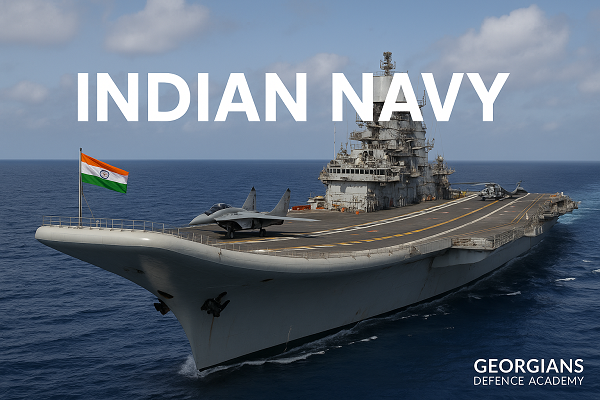
The Indian Navy is a technologically advanced, multi-dimensional maritime force entrusted with ensuring national security and safeguarding India’s maritime interests across the Indian Ocean Region. It operates aircraft carriers, nuclear submarines, state-of-the-art destroyers, frigates, corvettes, maritime aircraft and unmanned systems.
For Naval Services Selection Board candidates, understanding the Navy’s structure, weapons, roles and terminology is essential. This blog provides everything—from history to ship classification, ranks, operations, modernisation and interview-focused facts.
1. Historical Evolution of the Indian Navy
Ancient and Medieval
- India’s maritime tradition dates back thousands of years through the Harappan, Chola, Mauryan and Maratha navies.
Modern Foundation
- The modern Navy began as the Royal Indian Navy (RIN) under British rule (1612).
- Post-Independence in 1950, the prefix “Royal” was dropped and it became the Indian Navy.
- The naval ensign was updated in 2022 to incorporate the naval crest.
Major Operations
- Operation Vijay (1961): Liberation of Goa.
- Operation Trident & Operation Python (1971): Missile boat strikes on Karachi.
- Operation Cactus (1988): Maldives intervention.
- Operation Talwar (1999): Naval deterrence during Kargil.
- Anti-Piracy Operations (2008–present) in Gulf of Aden.
- Operation Samudra Setu (2020): COVID evacuation.
- Humanitarian Assistance and Disaster Relief operations across South Asia.
2. Roles and Tasks of the Indian Navy
Primary Roles
- Deterrence: Strategic and conventional deterrence in the Indian Ocean.
- Sea Control: Dominance of critical sea areas.
- Sea Denial: Preventing adversary’s use of the seas.
- Power Projection: Striking capability far from the coast.
- Strategic Deterrence: Achieved through Ship Submersible Ballistic Nuclear (SSBN) fleet.
Secondary Roles
- Coastal security
- Anti-piracy operations
- Maritime diplomacy
- Humanitarian assistance & disaster relief
- Search and rescue
- Marine environment protection
3. Organisational Structure
- President of India: Supreme Commander
- Chief of the Naval Staff (CNS): A four-star Admiral
- Vice Chief of the Naval Staff (VCNS) assists the CNS
- Deputy Chiefs handle operations, planning, personnel, logistics
- Integrated Headquarters of Ministry of Defence (Navy) oversees overall functioning
4. Naval Commands of the Indian Navy
1. Western Naval Command – Mumbai
Area: Arabian Sea
Functions: Power projection, aircraft carrier operations, anti-submarine warfare and maritime security.
2. Eastern Naval Command – Visakhapatnam
Area: Bay of Bengal
Largest command with nuclear submarine operations, carrier operations and strategic missions.
3. Southern Naval Command – Kochi
Role: Training Command
Includes Indian Naval Academy and all advanced training schools.
5. Rank Structure of the Indian Navy
Commissioned Officer Ranks
- Midshipman
- Sub-Lieutenant
- Lieutenant
- Lieutenant Commander
- Commander
- Captain
- Commodore
- Rear Admiral
- Vice Admiral
- Admiral
Sailor Ranks
- Master Chief Petty Officer Class I & II
- Chief Petty Officer
- Petty Officer
- Leading Seaman
- Able Seaman
- Seaman I & II
6. Full Forms of Important Naval Terms
Operational and Organisation
- INS: Indian Naval Ship
- SSB: Services Selection Board
- IOR: Indian Ocean Region
- HADR: Humanitarian Assistance and Disaster Relief
- SAGAR: Security and Growth for All in the Region
- UNCLOS: United Nations Convention on the Law of the Sea
- EEZ: Exclusive Economic Zone
- AEW: Airborne Early Warning
- AEW&C: Airborne Early Warning and Control
Ship and Submarine Types
- SSBN: Ship Submersible Ballistic Nuclear
- SSN: Ship Submersible Nuclear
- SSK: Ship Submersible Conventional
Weapons and Sensors
- LRSAM: Long Range Surface-to-Air Missile
- MR-SAM: Medium Range Surface-to-Air Missile
- UAV: Unmanned Aerial Vehicle
- ASW: Anti-Submarine Warfare
- EW: Electronic Warfare
- MF-STAR: Multi-Function Surveillance, Threat, and Alert Radar
- RAWL: Radar Warning and Locator
- CIWS: Close-In Weapon System
- IPMS: Integrated Platform Management System
7. Branches of Officers in the Navy
Executive Branch
Navigation, direction, communication, diving, aviation, warfare and hydrography.
Engineering Branch
Propulsion systems, engine rooms, mechanical systems.
Electrical Branch
Sonar, radar, weapon systems, electronics, electrical grids.
Education Branch
Technical and academic training.
8. Training in the Indian Navy
Indian Naval Academy – Ezhimala
Courses in: Seamanship, Naval Warfare, Gunnery, Ship Handling, Swimming, Leadership.
Professional Schools
- Anti-Submarine Warfare School
- Navigation and Direction School
- Gunnery School
- Electrical and Engineering Schools
- Diving School
- Submarine Training at INS Satavahana
- Air crew training at Air Force Academy and Naval Air Stations
9. Indian Navy Fleet and Major Platforms
A. Aircraft Carriers
- INS Vikramaditya – Modified Kiev-class, carrier-borne MiG-29K operations.
- INS Vikrant (Indigenous Aircraft Carrier-1) – India’s first indigenously built carrier.

10. Submarine Fleet
Nuclear Ballistic Missile Submarines
- INS Arihant (SSBN)
- INS Arighat (SSBN)
Nuclear Attack Submarines
- Lease-based Akula-class (SSN)
Conventional Submarines
- Kalvari-class (French Scorpene design)
- Sindhughosh-class
- Shishumar-class
11. Surface Combatants
Destroyers
Heaviest and most powerful surface combatants.
- Visakhapatnam-class
- Kolkata-class
- Delhi-class
Frigates
Multi-role warships, slightly smaller than destroyers.
- Shivalik-class
- Talwar-class
- Nilgiri-class (Project 17A)
Corvettes
Small, highly manoeuvrable ships.
- Kora-class (anti-ship)
- Kamorta-class (anti-submarine)
Offshore Patrol Vessels
Used for patrolling, surveillance, anti-piracy.
Amphibious Ships
- INS Jalashwa
- Shardul-class
- Magar-class
Fleet Support Ships
Refuelling and logistics for long-range deployments.

12. Naval Aviation
Fighters
- MiG-29K (carrier-borne fighter)
Maritime Patrol Aircraft
- Boeing P-8I Poseidon
- Dornier Do-228
Helicopters
- Sikorsky MH-60R Seahawk
- Kamov-31
- Sea King
- ALH Dhruv
Unmanned Aerial Vehicles
- Heron
- Searcher Mark-II
13. Bases and Infrastructure
- Karwar Naval Base (Project Seabird)
- Mumbai Naval Dockyard
- Visakhapatnam Submarine Base
- Port Blair – Andaman & Nicobar Command
- Cochin Shipyard
- Garden Reach Shipbuilders & Engineers
- Mazagon Dock Shipbuilders Limited
14. Maritime Strategy
Documents guiding naval operations:
- Indian Maritime Doctrine
- Ensuring Secure Seas – Indian Naval Strategy
- SAGAR Vision: Security and Growth for All in the Region
Focus Areas:
- Blue-water capability
- Indo-Pacific security
- Anti-submarine warfare
- Maritime domain awareness
- Cooperation with Quad and friendly navies
15. Recruitment Pathways for Naval SSB
- National Defence Academy Entry
- Combined Defence Services Entry
- Short Service Commission Entry (Executive, Technical, Education)
- 10+2 BTech Cadet Entry Scheme
- Naval NCC Special Entry
- Pilot and Observer Entry
- Submarine Specialisation Entry
16. Modernisation and Future Projects
- Indigenous Aircraft Carrier-2 (likely CATOBAR)
- Project 75 Alpha Nuclear Attack Submarines
- Project 18 Next-Generation Destroyers
- Twin Engine Deck Based Fighter development
- Unmanned underwater vehicles
- AI-enabled maritime surveillance
17. Important Topics for Naval SSB Interview
- Carrier Battle Groups
- Types of radar on naval ships
- Sea control vs sea denial
- Ballistic vs cruise missiles
- Importance of the Malacca Strait
- Why do you want to join the Indian Navy
- Anti-submarine warfare basics
- Blue-water navy concept
- Submarine propulsion
- Aircraft carrier operations
Conclusion
The Indian Navy is a strategic, technologically advanced, and globally respected maritime force. With a powerful fleet, strong aviation wing, expanding submarine force, and increasing indigenisation, it is central to India’s security architecture in the Indo-Pacific.
For Services Selection Board aspirants, mastering naval terminology, ship classifications, aircraft carrier types, naval commands, training structure and maritime strategy is crucial. This refreshed blog gives every essential detail required for outstanding performance in Personal Interviews, Lecturette, and Group Discussions.